March and April were hectic with Arctic Science Summit Week, then fieldwork in Svalbard and a trip to Vienna for the annual EGU Assembly.
The most exciting trip was, of course, our campaign to Svalbard to continue our monitoring of Borebreen’s active surge. In April, me and colleagues ventured back up to Svalbard to undertake our second season of monitoring Borebreen. This glacier has been surging in recent years and over winter has undergone an acceleration in flow, something that took us by surprise. Whilst interesting, it did give us a few headaches in terms of field logistics – when glaciers flow faster, they fracture and form huge crevasses. In April, these are covered by snow – how would we navigate this dangerous landscape?

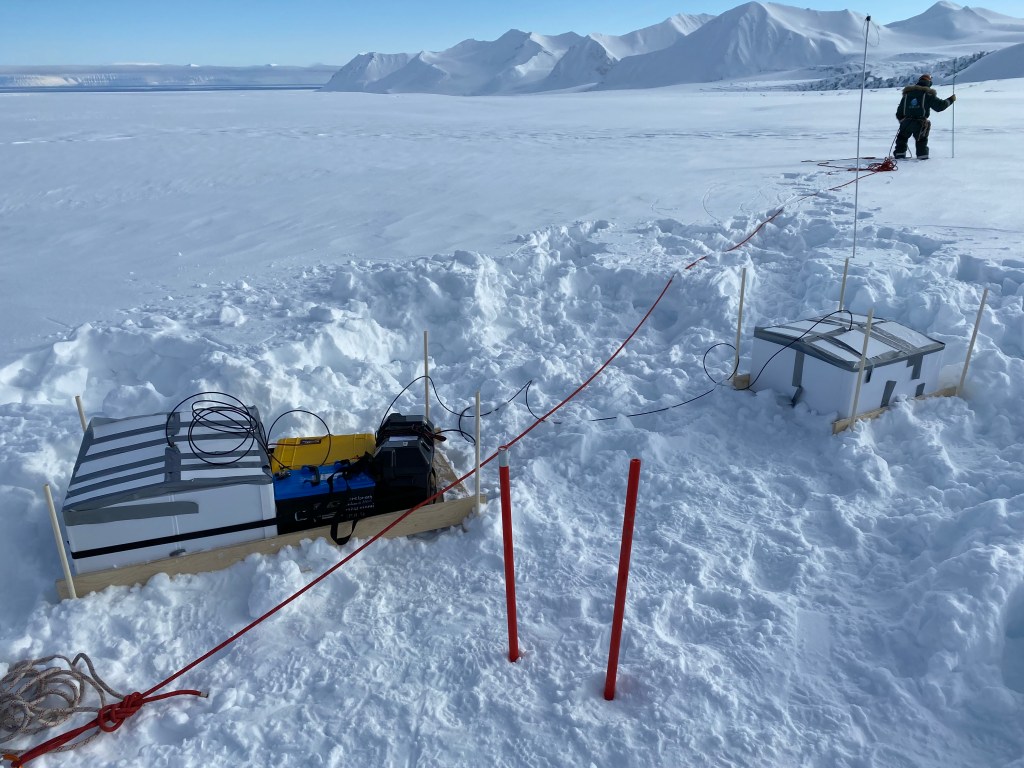
The answer: Helicopter! We left Longyearbyen and were dropped off onto the surface of Borebreen in 3 teams to install geophysical instruments on Borebreen’s surface. The aim here was to quantify processes at the bed of the glacier e.g. how muh meltwater is there? How is this driving the surge?

On the trip over we had some magnificant views. The surge had completely changed the landscape – so much so we could barely recognise the terminus of the glacier from only 6 months ago.

The instruments are now out measuring the glacier bed and will be picked up again later this summer. A pretty memorable trip this time and we are due another helicopter ride when we collect the instruments – stay tuned for more pictures soon!

 Research Page: William D. Harcourt