This page provides details of my background and researchers working in my group.
William D. Harcourt (Lead)
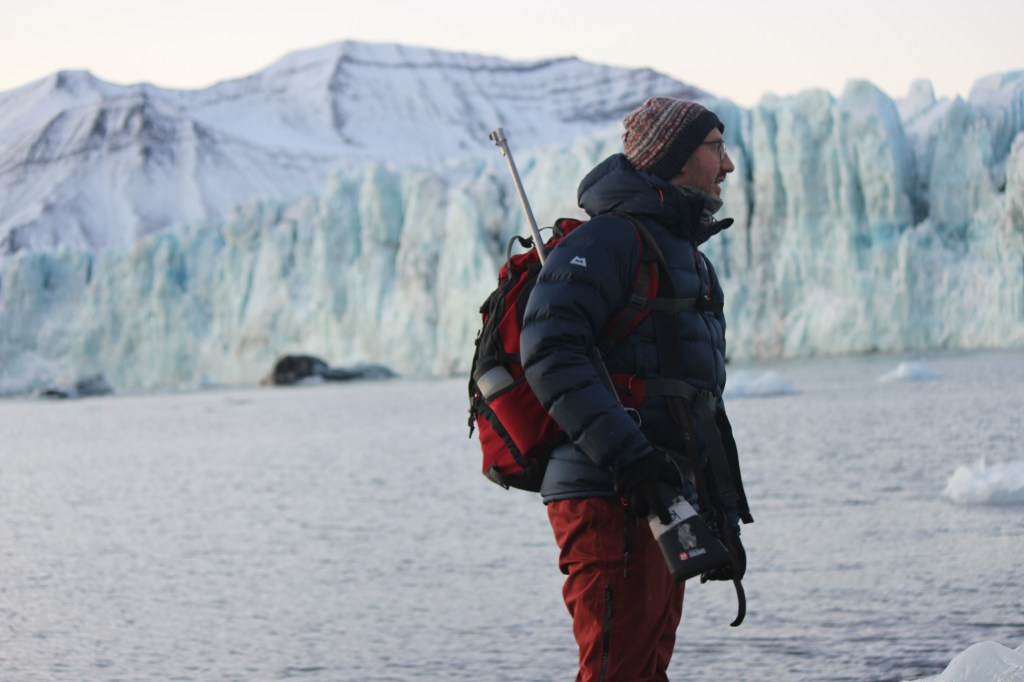
Will Harcourt is an Interdisciplinary Fellow at the University of Aberdeen researching the cryosphere in the Arctic (glaciers, snow, and sea ice) using remote sensing and machine learning techniques. Will’s research interests span across multiple disciplines, including glaciology, remote sensing & Earth Observation, data science, artificial intelligence, Arctic science and many more. Current includes: (1) processes of glacier instabilities such as surges and their impact on mass balance; (2) tidewater glacier dynamics in the Arctic; (3) the changing Arctic cryosphere; (4) digital twins of environmental systems with a particular focus on the cryosphere; (5) development of Artificial Intelligence (AI) techniques to understand glaciers and ice sheets; (6) developing remote sensing systems (satellite and ground-based) and data analysis technique to better understand glaciers.
Will graduated from the University of Exeter with a 1st Class Honours degree in Geography before moving to the University of Edinburgh to study for a MSc in Geographical Information Science (GIS). Between 2017 and 2018, he was a research assistant at Edinburgh Napier University where he led the first ever national scale analysis of seagrass change in the world (a slightly different world to his current research area!). In 2023, he completed a PhD at the University of St Andrews where he developed millimetre-wave radar as a tool for mapping and monitoring glaciers. He then joined the University of Aberdeen in 2022 as a Lecturer before starting an independent research fellowship in 2023.
Morag Fotheringham (Postdoctoral Research Fellow)
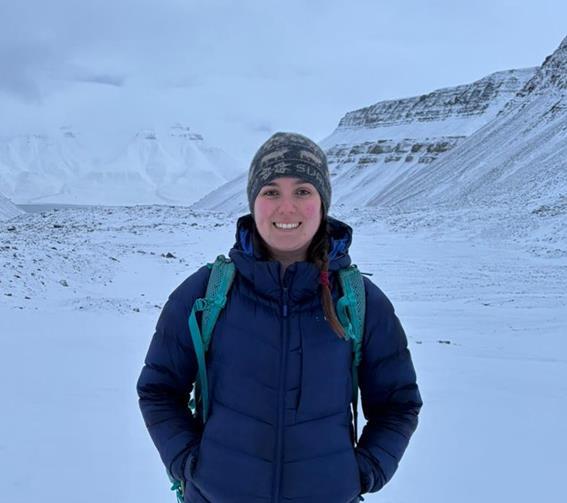
Morag Fotheringham is a post doctoral researcher at the University of Aberdeen working on the Svalbard Digital Twin project funded by ESA. The SvalbardDT looks to utilise Earth Observation data and AI in order to better describe Svalbard’s Cryosphere (Snow, Glaciers and Sea Ice). Her current research interests include Earth Observation and remote sensing to observe the cryosphere, glacier process modelling, EO derived glacier mass balance estimation, arctic oceanography and the development of AI to expand on EO data within a Digital Twin framework.
Morag obtained her PhD in Polar Earth Observation at the University of Edinburgh as part of the SENSE CDT. This included updating the CryoSat-2 global glacier mass balance estimate and investigating submarine meltwater rate of marine terminating glaciers in Svalbard and the Russian Arctic. Morag also holds a Msc in Atmosphere, Ocean and Climate Modelling from the University of Reading, where her dissertation topic was estimating freshwater content of the Arctic Ocean using modelling.
Jacob Seston (PhD Student)
Jacob completed his MSc at the University of Aberdeen and has now transitioned into a PhD program also at Aberdeen in the School of Geosciences. My research interests are focused on employing Data Science techniques in interdisciplinary settings, with an emphasis on real-world applications. I am also keen to expand my understanding of glaciology and maritime logistics.
Building upon recent advancements in sea ice forecasting, my research project aims to leverage advanced machine learning techniques, specifically Convolutional Neural Networks. The project integrates interdisciplinary datasets on various sea ice characteristics, such as extent, concentration, and drift, along with maritime vessel movements. The goal is to develop a more comprehensive predictive model. Additionally, high-resolution data products related to sea ice coverage will be extracted through satellite imagery analysis. This will enable the refinement of deep learning algorithms, with a particular focus on adapting the model to address localized and regional variations.
Niamh Doherty (PhD Student)
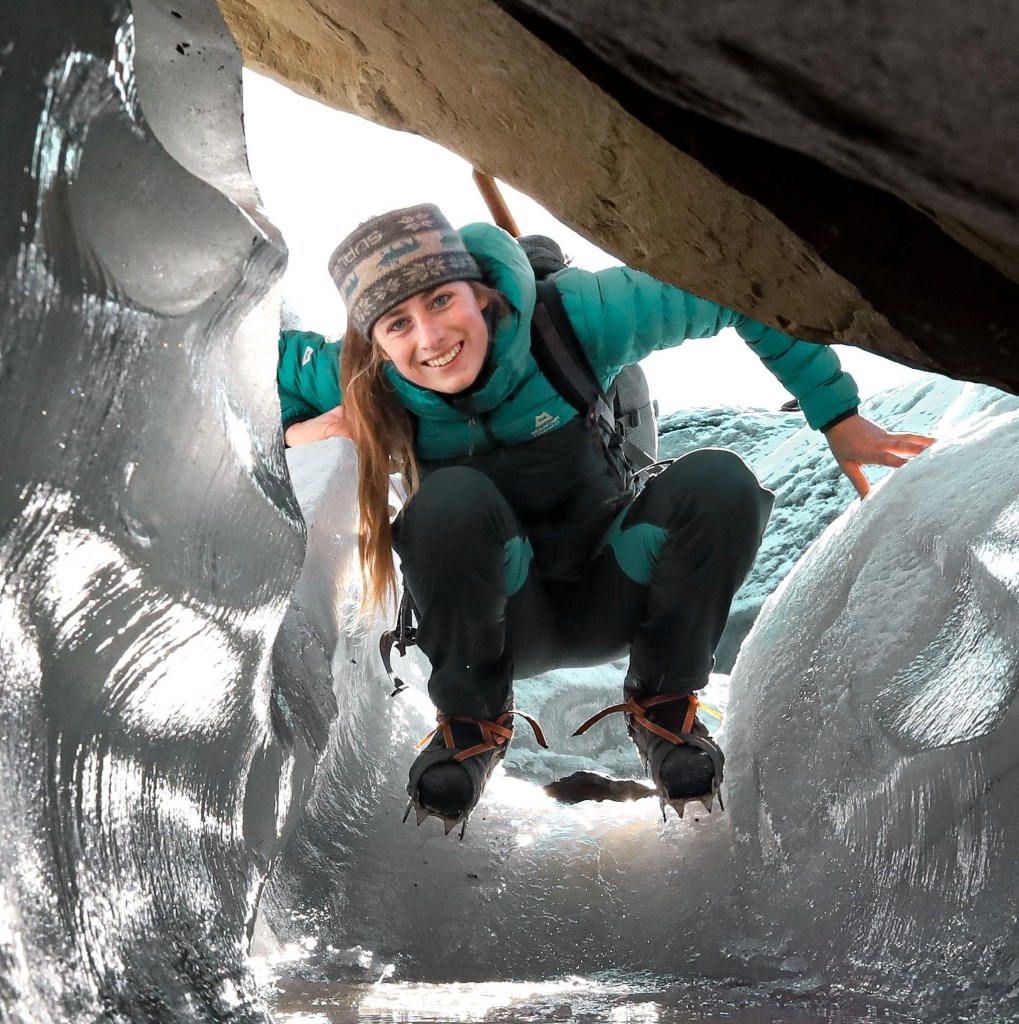
Niamh Doherty is a PhD student at the University of Aberdeen researching glacier surging in Svalbard. She graduated from the University of the Highlands and Islands (Scottish Association of Marine Science) with a 1st Class Bachelor’s (Hons) degree in Marine Science with Arctic Studies. As part of her degree, she participated in an exchange to Svalbard at the University Centre in Svalbard (UNIS), where she studied Arctic Marine Geology and the Quaternary and Glacial Geology of Svalbard.
Niamh’s research interests include acoustic echo character mapping of glaciated continental margins and glacier dynamics, including surging. Currently, her PhD project focuses on understanding the impact of glacier surging on ice mass loss in Svalbard. Methodologies used to assess and quantify ice mass loss due to surging include comparing in-situ glaciological and geodetic surface mass balance measurements (including high-resolution drone surveys) of active and quiescent surge-type glaciers in Svalbard. This project will enhance our understanding of the non-linear impact of surges on mass loss at both individual and regional levels, which is not yet reflected in future sea-level rise projections. These findings have important implications for policymakers.
Steven Wallace (PhD Student)
My research interests focus on how deep learning and machine learning algorithms solve computer science problems using complex data sources. Currently, I am a PhD student researching and trying to improve crevasse mapping with semantic segmentation on continental glaciers. The data sources are high-resolution remote-sensing images from satellites and Unmanned Areal Vehicles (UAVs), also known as drones. With the advancements in deep learning, the primary focus of my research is to analyse how accurately pre-trained or furtherly adapted deep learning foundation models can segment in the wild complex imagery compared to conventional machine learning methods.
Vibha Chauhan (PhD Student)
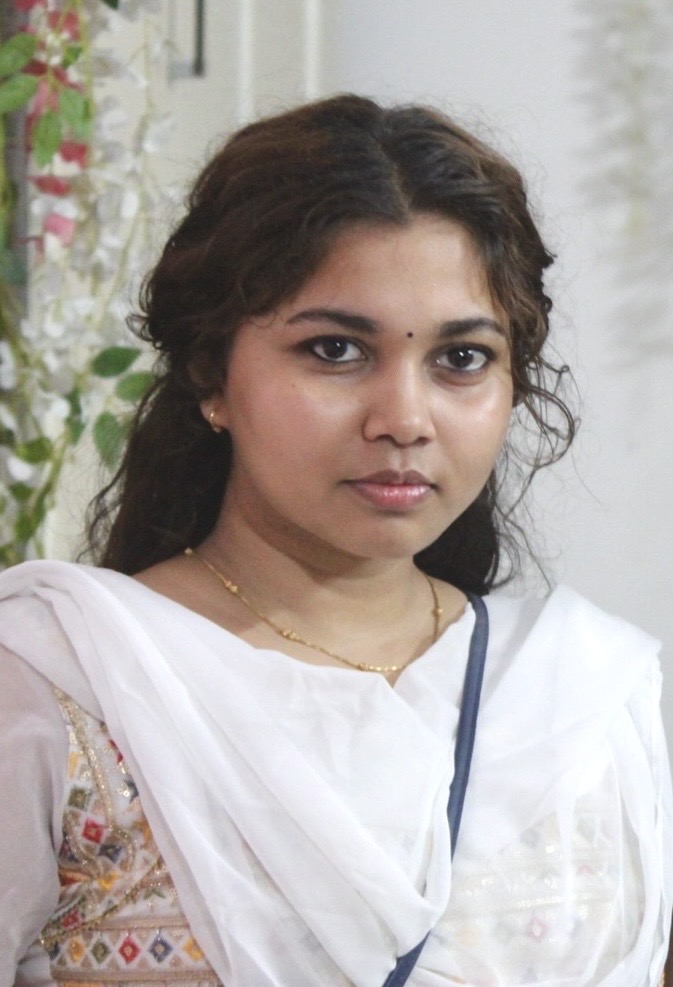
I am a graduate of IISER Pune , where I worked across diverse Earth science projects. I spent 1.5 years as a Research Assistant with the Indian Army’s Engineering division, specialising in soil mechanics, geotechnical testing, and officer training. I am now pursuing a PhD at the University of Aberdeen, where I study mineral enrichment beneath glacial deposits in northeast Scotland. My research integrates glacial geology, geochemistry, and machine learning to trace the provenance of ore-bearing material in glacial tills. I am particularly interested in data-driven, interdisciplinary approaches that connect Earth science with real-world applications.
 Research Page: William D. Harcourt